
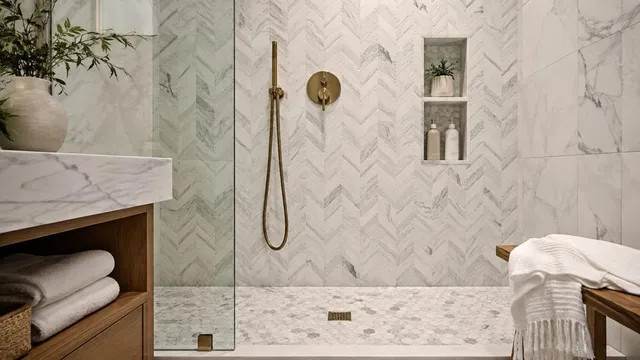
There is a moment during almost every kitchen or bathroom renovation when practical decisions suddenly become visual ones. The plumbing is planned. The cabinets have been measured. The shower dimensions are settled. Then someone puts a piece of real marble on the table and the entire conversation changes.
Natural stone has that effect.
When searching for marble mosaic tile for sale, it is tempting to make the decision based on a photograph, pattern, or price per square foot. Yet marble deserves a little more thought. Every piece has its own veining, shade, mineral character, and surface variation. That individuality is exactly what makes natural stone attractive, but it also means choosing marble is different from ordering a manufactured material designed to look identical from box to box.
The right mosaic can make a relatively simple bathroom feel carefully designed. A thoughtfully selected marble backsplash tile can become the detail that pulls an entire kitchen together. And when choosing a marble shower floor tile, appearance is only one part of the decision — scale, finish, grout lines, maintenance, and installation matter too.
So how do you choose well without turning a renovation into an endless series of decisions?
Start with the space rather than the tile.
Why Marble Mosaic Still Feels Different From Imitation Stone
Porcelain and ceramic manufacturers have become remarkably good at reproducing marble patterns. Some products look convincing from several feet away.
Real marble, however, behaves differently visually.
The veining does not simply repeat every few tiles. Subtle mineral deposits appear unexpectedly. One piece might have a quiet gray line while the neighboring piece contains a much stronger movement. Light also interacts with genuine stone in a way that contributes to its depth.
That variation can be either an advantage or a frustration depending on expectations.
Someone expecting absolute uniformity may open several boxes and wonder why the pieces are not identical. Someone who specifically wants natural material may look at the same variation and say:
“That is exactly why I chose marble.”
Neither reaction is wrong.
This is why viewing samples before committing to a larger purchase can be valuable. Surfaces Galore offers samples across its natural-stone selection, allowing homeowners and designers to see color, texture, and finish in the actual environment where the material may eventually be installed.
Put the sample beside the cabinets. Look at it in morning daylight and again under artificial lighting at night. Place it next to the countertop.
A marble that looks cool white online can feel warmer or grayer once surrounded by the other materials in a room.
That small test can prevent an expensive mismatch.
What to Look for When Shopping for Marble Mosaic Tile for Sale
Finding marble mosaic tile for sale is easy. Finding the right marble mosaic for a specific project requires more attention.
Start with four questions:
• Where will the mosaic be installed?
• How much visual movement do you want?
• What finish works best for that location?
• How much maintenance are you comfortable with?
These questions quickly narrow the field.
A dramatic stone may look spectacular as a small backsplash feature but feel overwhelming across a large bathroom. Conversely, a subtle white marble that seems almost understated in a sample can become beautiful once installed across an entire wall.
Scale changes perception.
Surfaces Galore carries natural-stone collections ranging from classic Carrara White and Calacatta Gold to Statuario White, Nero Marquina, Thassos White, Bardiglio, Ming Green, Crema Marfil and more expressive stones such as Calacatta Viola. Mosaic options also extend beyond simple square pieces into hexagons, brick layouts, penny rounds, checkerboard arrangements and custom designs.
This variety matters because the stone and pattern should be considered together.
Carrara, Calacatta, Statuario or Something Bolder?
White marble is often treated as one category. It isn't.
Carrara White
Carrara is one of the easiest stones to imagine in a traditional kitchen or bathroom. Its soft white-to-gray background and subtle gray veining create movement without necessarily dominating the room.
It works especially well when the design already contains several other focal points.
Picture a kitchen with warm white cabinets, brushed metal hardware, oak flooring and a Carrara marble backsplash tile. The backsplash contributes texture and natural variation while allowing the cabinetry and architectural details to remain important.
Calacatta Gold
Calacatta Gold tends to make a stronger statement.
Its creamy white background and more pronounced veining can introduce gray and warm golden tones, making it particularly interesting in rooms containing brass, warm wood or beige elements.
For a homeowner trying to avoid an overly cold all-white bathroom, those warmer veins can make a substantial difference.
Statuario White
Statuario is another option when the objective is a cleaner, more luxurious white-marble appearance with distinctive natural movement.
Used carefully, it can become the primary visual material rather than simply a background surface.
Nero Marquina
Then there is the opposite approach.
Nero Marquina introduces deep black stone crossed by contrasting white veining. Surfaces Galore offers it in formats including brick mosaics and larger tiles.
Imagine a powder room with a black marble feature wall, a simple white basin and restrained hardware. Very few materials are required because the stone itself supplies most of the drama.
Sometimes the best design decision is not adding more. It is choosing one material strong enough to do the work.
Marble Backsplash Tile: Where Natural Variation Becomes an Advantage
A backsplash is one of the safest places to be expressive with marble because it occupies a highly visible but relatively controlled area.
The key is understanding what surrounds it.
If a countertop already contains dramatic veining, adding an equally busy mosaic immediately above it can create visual competition. A simpler marble backsplash tile may work better.
With a relatively quiet countertop, however, a mosaic can become the focal point.
Consider two versions of the same kitchen.
In the first, the homeowner chooses plain white cabinets, a simple light countertop and a subtle rectangular marble mosaic. The result is restrained and timeless.
In the second, the same cabinets are paired with a Calacatta-inspired herringbone or geometric mosaic featuring pronounced natural veining. Suddenly the backsplash becomes the room's defining element.
Neither approach is inherently better.
The question is: Where do you want the eye to go first?
That question solves many design dilemmas.
Do Not Forget the Grout
Grout is frequently treated as an installation detail when it is actually part of the design.
With small mosaics, there may be hundreds of grout lines across a wall. Their color can dramatically alter the finished appearance.
A grout close to the marble's background tone tends to create a quieter surface. Strong contrast emphasizes every individual piece and makes the geometry more obvious.
Take a white hexagonal mosaic.
White or pale-gray grout allows the marble itself to dominate. Dark-gray grout makes the hexagon pattern much more pronounced.
Neither is universally correct.
Before installation, place a sample beside several grout colors rather than choosing from memory.
Choosing Marble Shower Floor Tile Requires Different Thinking
A shower floor presents different challenges from a backsplash.
Water is constant. Drainage matters. Foot contact matters. Cleaning matters. And the installation must accommodate the slope toward the drain.
That is why mosaics are commonly attractive candidates for shower floors.
Smaller pieces create more grout joints, and those joints can contribute additional traction compared with a broad polished surface. Small mosaic formats can also conform more naturally to a properly constructed shower slope.
When considering marble shower floor tile, however, finish deserves particular attention.
A highly reflective polished marble may look extraordinary on a wall. The same surface may not be the preferred choice underfoot in a wet area. Honed or otherwise appropriate finishes are often considered for floors because the requirements are different.
Always discuss the specific stone, finish and installation location with an experienced tile professional.
A Practical Bathroom Scenario
Imagine a 6-by-9-foot bathroom.
The homeowner initially wants the same large white marble tile everywhere: floor, shower walls and shower floor. On paper, consistency sounds sophisticated.
Then the installer raises a practical issue. Large tiles are more difficult to accommodate around the shower's multiple slopes toward a central drain.
The design changes.
Large-format marble stays on the main bathroom floor and shower walls, while a coordinated 2-inch mosaic is selected for the shower floor.
The result can actually look more intentional than the original plan.
The smaller mosaic visually defines the shower area while maintaining the same stone family throughout the room.
A compromise can improve a design rather than weaken it.
Pattern Matters Almost as Much as Stone
Once you begin comparing marble mosaic tile for sale, the number of shapes can become intimidating.
Squares are only the beginning.
Hexagons feel geometric without being overly decorative. Brick mosaics create familiar horizontal movement. Herringbone patterns add energy. Penny rounds introduce softer geometry. Checkerboard layouts create a completely different historical character.
Surfaces Galorealso features custom mosaic options, allowing combinations of colors, stones and patterns for projects requiring something less standard.
How should you choose?
Consider the architecture.
A traditional home may comfortably accommodate checkerboard marble, basketweave-inspired arrangements or smaller classic mosaics. A minimalist contemporary bathroom may benefit from a restrained hexagon or rectangular format. A dramatic powder room can tolerate patterns that might feel excessive across a larger space.
Pattern scale is equally important.
Tiny, intricate mosaics viewed across a large wall can become visually busy. Larger mosaic elements usually read more calmly from a distance.
There is also more grout to consider with intricate designs.
Beautiful? Absolutely.
Maintenance-free? No.
Polished vs. Honed Marble
This decision is often underestimated.
Polished marble reflects more light and tends to emphasize color and veining. It can make dark marble appear richer and white marble feel more luminous.
Honed marble has a softer, more matte character.
For a backsplash or decorative wall, polished material can create an elegant reflective surface. For flooring, many homeowners prefer the quieter appearance of honed stone.
The decision should also account for everyday use.
Marble is a natural calcium-based stone and requires appropriate care. Acidic substances can affect its surface. That matters particularly in kitchens, where lemon juice, vinegar, wine and other acidic ingredients are part of normal life.
Someone who expects marble to remain visually untouched regardless of use may be happier with another material.
Someone comfortable with natural aging may see things differently.
A faint mark developed over years of cooking does not necessarily destroy a marble kitchen. For some owners, that patina becomes part of the home's character.
This is partly a technical decision and partly a personality test.
Natural Variation: The Feature That Can Also Cause Problems
Natural stone is not printed.
This sounds obvious, yet it is responsible for many misunderstandings during installation.
Color and veining can vary between pieces. That means installers should not simply open one box, install it completely, and move to the next.
A better approach is to inspect and dry-layout material from multiple boxes before installation. Pieces can then be distributed so that natural variations appear intentional across the finished surface.
Suppose one carton contains several darker pieces.
Installed together, they may create what looks like an accidental patch.
Distributed throughout the project, those same pieces can produce attractive natural movement.
The material did not change.
The layout strategy did.
This is one reason skilled installation matters so much with marble.
Ordering Enough Material Can Save a Future Headache
One of the most frustrating renovation mistakes happens several months after completion.
A tile cracks. A plumbing repair requires access behind a wall. A small section must be replaced.
Then someone discovers the exact stone is unavailable or the new batch looks noticeably different.
Natural stone varies by production batch, so purchasing only the mathematically exact square footage can be risky.
Projects typically need additional material for cuts, breakage, pattern alignment and future repairs. The appropriate overage depends on layout complexity, room dimensions and tile format, so the installer should calculate the required quantity.
A straightforward rectangular installation may generate relatively little waste.
A diagonal layout or complex mosaic transition can require considerably more cutting.
Do not guess.
Ask the installer before placing the final order.
Why Samples Are Worth the Extra Step
Online shopping makes access to specialized natural stone much easier, but screens create limitations.
Brightness settings differ. Photography lighting differs. Natural marble itself differs.
Ordering samples is therefore less about checking whether a tile is "pretty" and more about testing compatibility.
Put a sample where it will actually live.
For a marble backsplash tile, stand it vertically behind the countertop. For bathroom material, place it beside the vanity, fixtures and wall color. If you're considering marble shower floor tile, wet the sample and observe how its color changes.
Natural stone often becomes visually richer when wet.
Also inspect the material from several feet away.
Designers frequently examine samples up close, but homeowners experience rooms from a distance. A vein that looks dramatic from six inches away may become subtle across the room.
Price Should Be Considered in Context
When comparing marble mosaic tile for sale, price per square foot is obviously important, but it should not be the only comparison.
Natural stone varies significantly in grade, selection, consistency, finish and fabrication quality.
A cheaper product that produces excessive waste, contains undesirable variation or requires replacement does not necessarily create a cheaper finished project.
There are also shipping and damage considerations.
Stone is heavy and relatively vulnerable during transportation. Surfaces Galore states that its shipments are insured and that the large majority of orders are dispatched within a short processing window. The company also offers samples and specializes in premium natural stone rather than positioning itself around commercial-grade bargain material.
For a homeowner spending thousands of dollars on labor, waterproofing, cabinetry and fixtures, saving a relatively small amount on the visible finishing material can sometimes be false economy.
Labor is particularly important.
If installation costs $3,000 and the tile costs $1,500, replacing disappointing tile later does not cost another $1,500.
It may require paying for demolition, preparation and installation again.
The cheapest box of tile is not necessarily the cheapest finished wall.
Marble Mosaic in Small Rooms: A Useful Design Trick
Small bathrooms are often treated cautiously.
Everything becomes white. Everything becomes plain. Designers worry that pattern will make the space feel smaller.
Sometimes the opposite happens.
A carefully chosen marble mosaic can give a small bathroom a stronger identity, making the limited dimensions feel intentional rather than restrictive.
For example, imagine a compact powder room with simple painted walls and a vanity only 30 inches wide.
Instead of covering every surface with stone, install an expressive marble mosaic behind the vanity from countertop to ceiling.
The required square footage remains relatively modest, yet the visual impact is considerable.
This strategy can also make premium materials more financially accessible.
Rather than buying 150 square feet of expensive marble, you might need only 25 or 30 square feet for a focused feature.
Use less material.
Make it matter more.
Common Mistakes When Buying Marble Mosaic Tile
Several mistakes repeatedly turn an exciting material choice into unnecessary frustration.
Choosing From a Photo Alone
Photography is useful for narrowing options, but natural stone should ideally be evaluated through a physical sample whenever possible.
Ignoring Finish
A tile appropriate for a decorative wall is not automatically the best option for a wet floor.
Forgetting Grout Color
On mosaics, grout occupies a meaningful percentage of the visible installation.
Ordering the Exact Square Footage
Cuts and waste are unavoidable. Natural variation also makes having spare matching material valuable.
Installing Straight From One Box
Mixing material from multiple cartons helps distribute shade and vein variation.
Expecting Manufactured Uniformity
Natural marble contains variation because it is natural marble. If identical appearance is the priority, porcelain may actually be the better choice.
And that is worth saying clearly.
Marble is not automatically right for every project.
When Marble May Not Be the Best Choice
There are situations where another material makes more sense.
If the household wants essentially zero concern about acidic spills, staining, sealing or natural surface changes, porcelain can be easier to live with.
A heavily used rental property may prioritize simple maintenance over natural-stone character.
Similarly, someone who becomes frustrated by subtle differences between individual tiles may struggle with genuine marble.
That does not make marble impractical.
It simply means expectations need to match the material.
The best surface is not the most expensive one. It is the material whose appearance and behavior fit the person using the room.
For people who appreciate natural variation, marble offers something manufactured surfaces deliberately try to imitate: individuality.
Creating a Cohesive Kitchen or Bathroom
A good marble installation rarely exists in isolation.
Think about the entire material palette.
If you choose a strongly veined marble backsplash tile, consider quieter countertops and cabinetry. If the marble is subtle, surrounding materials can carry more visual character.
In bathrooms, repeating one marble in different formats is an effective technique.
For instance:
• 12 x 24 marble tiles on the main floor
• matching rectangular tiles on shower walls
• smaller mosaics from the same collection on the shower floor
• coordinated stone trim around niches or edges
The room feels connected without every surface looking identical.
This is particularly useful when working with Carrara White, Calacatta Gold, Statuario or other collections available in multiple formats and finishes.
How to Make the Final Decision
When you have narrowed the search to two or three options, stop looking at hundreds of additional products.
Bring the finalists into the actual room.
Compare them with permanent materials — countertops, cabinetry, flooring, fixtures and paint.
Then ask three practical questions.
Does this stone work with the room's lighting?
Is this format appropriate for where it will be installed?
Am I comfortable with the maintenance and natural variation of real marble?
If the answer is yes to all three, you are probably close to the right choice.
There will rarely be one objectively perfect marble.
Carrara may create a softer atmosphere. Calacatta Gold may introduce warmth and stronger movement. Nero Marquina can make the project dramatic. Thassos can produce a cleaner white appearance. A custom mosaic can turn the stone into something closer to architectural decoration.
The decision depends on what you want the room to say.
Final Thoughts: Buy Marble for What It Is
Searching for marble mosaic tile for sale should not simply be an exercise in finding the lowest price per square foot.
You are choosing a natural material that may remain in the home for decades.
Look closely at the stone. Compare finishes. Think about grout. Order samples. Consider the installation environment. Calculate adequate overage with your installer. Most importantly, accept that variation is part of the material rather than a manufacturing defect.
For kitchens, the right marble backsplash tile can turn an otherwise restrained design into something memorable. In bathrooms, a carefully selected marble shower floor tile can combine visual continuity with the practical advantages of a smaller mosaic format.
And when you find marble mosaic tile for sale that looks right, do not evaluate it only as a small sample in your hand.
Imagine the entire surface.
Imagine morning light crossing the veining. Imagine the mosaic surrounding a shower niche or running behind a kitchen range. Imagine how the stone will interact with wood, metal, glass and painted surfaces.
That is ultimately why people continue choosing real marble despite the availability of easier substitutes.
It isn't perfectly uniform.
It requires thought.
It may develop character with use.
And that is precisely the point.